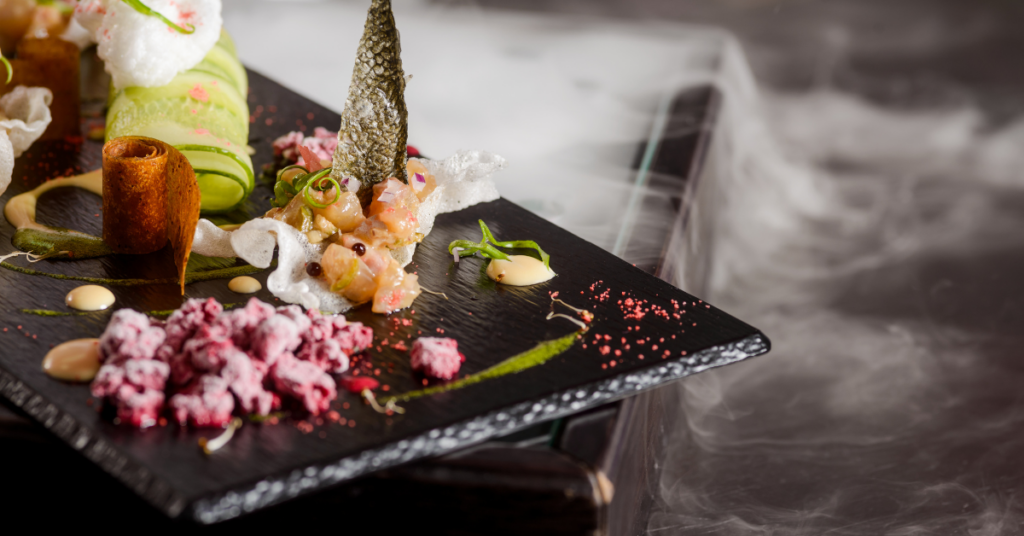
Science, creativity and experimentation. Molecular cooking embraces all these concepts, proving to be one of the most fascinating frontiers of the modern gastronomy.
In addition to revolutionizing the way we perceive food, the molecular cuisine has opened new horizons of tastes and presentations, "contaminating" haute cuisine that, in one way or another, makes use of special molecular cooking techniques.
Molecular cuisine is a fascinating discipline that continues to evolve constantly. The chefs and scientists involved in this culinary adventure are taking gastronomy to the next level, revolutionizing the way we relate to food, how we look at it, taste it, and conceive of it.
Through the use of cutting-edge techniques such as the spherification, the sous vide and the cryo-freezing, it is possible to create incredible and fascinating dishes that can amaze and enchant diners.
Molecular cuisine is not only a tool to stimulate the senses, but also a demonstration of how science can enrich the culinary arts. The creativity, experimentation and passion of molecular chefs continue to propel the boundaries of gastronomy, opening up new horizons of flavors and presentations. Undoubtedly, molecular cuisine will remain a major source of inspiration for cooks and foodies around the world.
The Fascination of Molecular Cooking
Molecular cuisine Is enjoying great success. A little bit of the wholehaute cuisine was won over by this innovative gastronomic philosophy, born from the minds of visionary chefs and scientists who wanted to explore the interaction between the ingredients at the molecular level.
The study behind the chemical processes, the interactions between molecules and reactions to phenomena such as heat or cold, has made it possible to harness the physical and chemical properties of foods to create unique sensory experiences. This discipline combines the art of cooking with the rigor of science, paving the way for a wide range of possibilities for those who want to amaze diners with unusual and creative dishes.
Spherification and Gelling
At the basis of molecular cuisine are two emblematic techniques: the spherification and the gelling.
The first involves the transformation of a liquid into small bead-like spheres. This process is accomplished through the use of sodium alginate, a compound derived from algae, which is mixed with the desired liquid and then immersed in a calcium chloride solution. The result is small spheres that are soft on the outside and liquid on the inside, exploding with flavor in the mouth.
La gelling, on the other hand, involves the use of gels and thickeners such as agar-agar or xanthan gum. These ingredients make it possible to turn liquids into gels or to create unusual textures, such as gorgonzola "sponge" or strawberry "smile." These are two techniques that allow cooks to play with the texture of foods and present dishes that are visually and flavorfully surprising.
Emulsification and Flavoring
Molecular cuisine also offers new perspectives on emulsification and flavoring. Chefs can take advantage of the soy lecithin or the ultrasonicators to create incredibly light and velvety sauces and velvety soups. These techniques make it possible to combine ingredients that would not normally be mixable and achieve amazing textures.
As for flavoring, molecular cooking allows the flavors of ingredients to be captured and concentrated in extraordinary ways. The use of aromatic vapors or the creation of essence powders allow the addition of intense and unexpected flavor notes to dishes.
Explosion of Flavors: Sous Vide and Cryo-Freezing
Another crucial aspect of molecular cuisine Is concerned with the accurate control of cooking temperature. The sous vide technique is one of the preferred methodologies of the molecular chefs. It consists of cooking food in a vacuum at very low and constant temperatures for an extended period of time. This process makes it possible to keep the organoleptic properties of ingredients intact and to achieve uniform and perfect cooking.
The cryo-freezing, on the other hand, is a technique that uses liquid nitrogen to rapidly freeze foods at extremely low temperatures. This process preserves the cellular structure of foods and keeps intact the flavors and textures. In addition, the cryo-freezing offers cooks the opportunity to create ultra-creamy sorbets and ice creams without the addition of fat.
It is pronounced "su vid" and refers to raw materials or intermediate foods that are cooked under controlled and stable temperature conditions inside vacuum pouches. This method was first described by Sir Benjamin Thompson, Earl of Rumford, in 1799, which, however, used air rather than water as the thermoreactor fluid. It was later rediscovered by American and French engineers in the mid-1960s, developed as a method of industrial food preservation.
The Customer Experience and Presentation
Molecular cuisine is not only about flavors, but also about presentation. Molecular chefs are true artists who take care of every detail to provide a complete sensory experience. The presentation of dishes becomes a performance, with the use of glassware, ceramic plates and striking decorative elements.
In addition, many molecular chefs began experimenting with the use of digital technologies and projections to create extraordinary visual effects during the tasting of the dishes. These innovations make the meal a memorable and engaging experience.
Discover the molecular cooking course by Italian Food Academy held by the chef Davide Damiano.