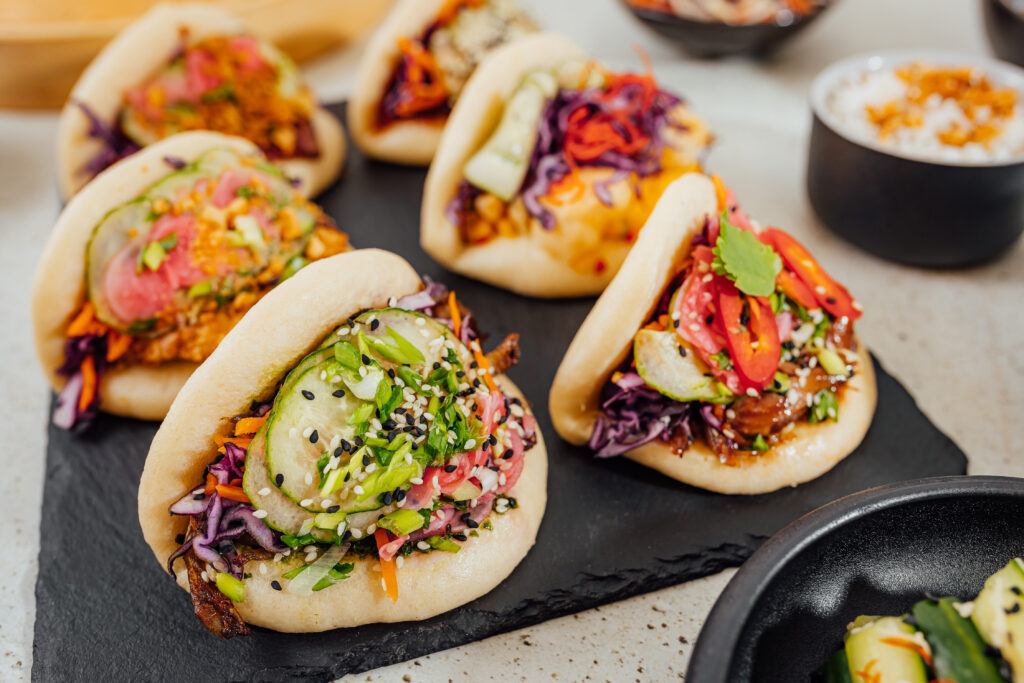
Soft, tasty, fragrant. I Bao Chinese are a delicacy that has now become international. Typical of northern China, they have also spread to Japan, Korea, Vietnam, Taiwan, and then arrived in the West as well, taking a slightly larger form and declining in gourmet variants thanks to fillings other than the traditional one, which wink at local flavors.
Over here in Italy, places and kiosks dedicated to this fluffy 0-flour dough envelope, filled with flavorful combinations such as pork, beef, chicken, vegetables, mushrooms, shrimp, tofu and more, are now flourishing. And even sweet ingredients such as red bean cream or fruit pastes. Lately, then, from street stalls. i bao moved to the elegant restaurants, becoming a real treat for the Gourmand enthusiasts.
The watchword when it comes to bao is precisely creativity, as well as a good deal of technical skill and care in preparation.
Yet these simple delicacies evoke age-old traditions, cultural symbols, and sometimes fascinating legends.
The Origin of Bao Is truly mysterious. Also known as baozi (包子), mantou o steamed baozi date back to very ancient times in Chinese history. In fact, it seems that their roots go back to the period of the Zhou Dynasty, around the 700 BC. However, their true development occurred during the Dynasties Wei e Jin (220-420 CE), when the concept of leavened and filled dough began to take shape.
Mantou is one of the earliest ancestors of this category of street food. Originally, the mantou was simply an unfilled loaf of bread, but as Chinese cuisines evolved, the mantou was transformed into a Leavened treat stuffed with meat, vegetables or sweets.
There are numerous legends related to the bao. One of the most famous legends is that of the "Baozi Ruby". During the Tang Dynasty (618-907 A.D.), a young craftsman named Wang wandered around the city looking for work. Wang was gifted with extraordinary mastery in the art of making baozi, and his baozi were as exquisite as they were fascinating to the eye.
Wang met and fell madly in love with a beautiful and kind princess named Zhu. In a bold and romantic gesture, Wang created a baozi in the form of a ruby, inspired by the princess's favorite gemstone. Inside the baozi, he hid a carefully written declaration of love. When the princess bit into the baozi, she discovered the surprise and accepted Wang's marriage proposal.
Chinese bao are also associated with symbolism of power and prosperity. I "Dragon Baozi", for example, with their characteristic dragon shape, represent strength and are a symbol of good luck and positive energy, so much so that they are consumed in large quantities especially during Chinese New Year and other special occasions.
Another legend, however, says that the inventor of the bao was Zhuge Liang, great strategist and prime minister of the Shu Dynasty who thought of an energetic and quick food for the troops.
The name 'bao' could be translated, among other things, as 'barbarian's head' because -still according to legend- Liang had the buns made in the shape of a head, as, to cross a river, the sacrifice of 49 men was required. By thus throwing, as a propitiatory gesture to gain a safe ford, the same number of bao into the rushing waters, the army was able to cross the river without any problems. Of course, legend and sources are mixed while there is no doubt that by now these soft little buns have conquered the world.
This sandwich, initially prepared as a kind of "bag" to hold and carry food, making it ideal for travel or as a take-out meal, today, in China it is eaten in both main meals and breakfast, partly because they are often part of the dim sum, which is a type of southern Chinese cuisine that includes a wide range of light dishes to be served along with Chinese tea.
What makes them special is the special steaming which makes it possible to obtain a very fluffy dough in which increasingly unique fillings are laid and inspired by the creativity and culinary influences of the person making them.
This has led to the creation of several regional variants such as, for example, the Gua Bao, originating in Taiwan, which come with a thicker, softer dough folded in on itself and usually containing marinated pork, ground peanuts, vegetables and seasonings. Or even the Xiaolongbao, small and thin, often filled with pork and broth. They became famous precisely because of the special feature of the broth inside, which becomes hot and juicy during steaming.
Whether traditional or revisited, oriental style or European reinterpreted, street food or gourmet restaurant version, it is certain that the bao is one of the preparations that appeals to most people's palates.
In short, whichever variant you choose and whichever filling you prefer, bao are an easy and enjoyable way to try new flavors without giving up a familiar and international sandwich form.
In their Japanese version, bao fall under that tasty Japanese street food that is so popular all over the world.
It is precisely Japanese street food that is the subject of the Japanese noodle and street food course organized by Italian Food Academy.