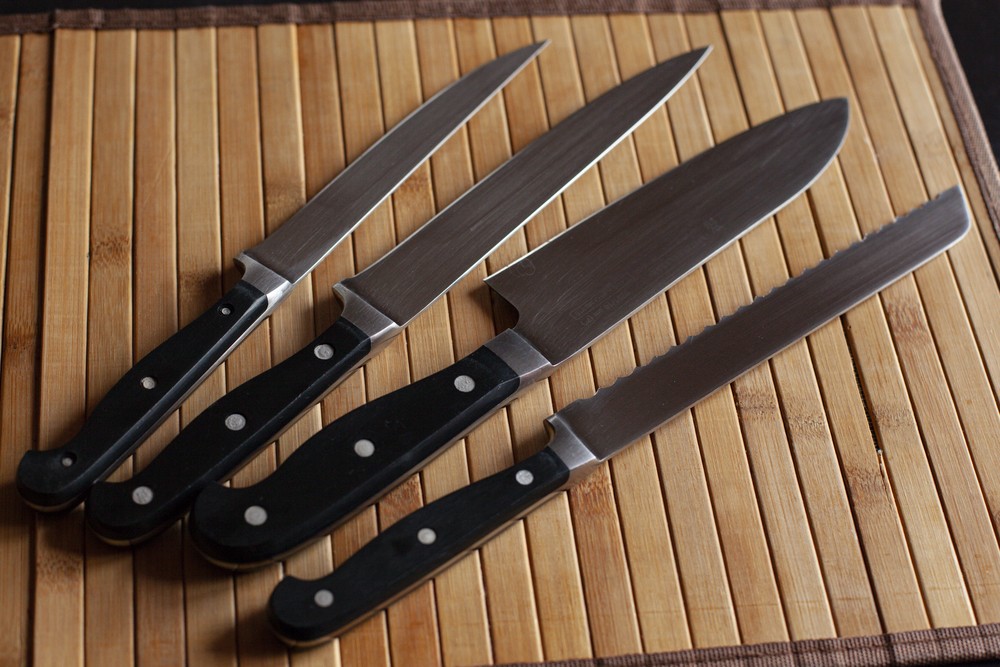
I knives in Japanese Cooking are important tools of the trade: indeed, it is through this tool that the dishes of noble Japanese tradition which, as we have seen on other occasions, place a lot of emphasis on aesthetics and plating.
The importance of knives is given by the fact that these absolutely must not alter the flavors of dishes, indeed, their task is Enhance the organoleptic characteristics of ingredients, enhancing the culinary preparations. For this reason they must be of excellent quality and stored properly. Consider that an excellent Japanese knife can last as long as 20 or 30 years.
Among the main knives used in the Japanese cuisine, there are:
- the debabōchō, a thick-bladed knife used to debone fish;
- the usubabōchō, a thin-bladed knife for cutting vegetables and decorating sashimi or hassun;
- The yanagiba, sashimi knife;
- the yanagibabōchō, a knife with a long, single-edged blade used to cut sashimi strips while preserving their texture intact;
- the Hamokiribōchō, a heavy knife for cutting the bones of conger eel;
- the gyūtō, a double-edged blade used for cutting meat and vegetables, also called the "petit knife."
Next to these main ones, then, there are the specialized knives for conger eel, eel and pasta, totaling around 20 blades.
When cutting the fish, it is important to move the single, sharp blade toward yourself in relation to the texture of the fish-this is the secret to obtaining an excellent sashimi, that is, to have the right consistency that does not alter the flavor.
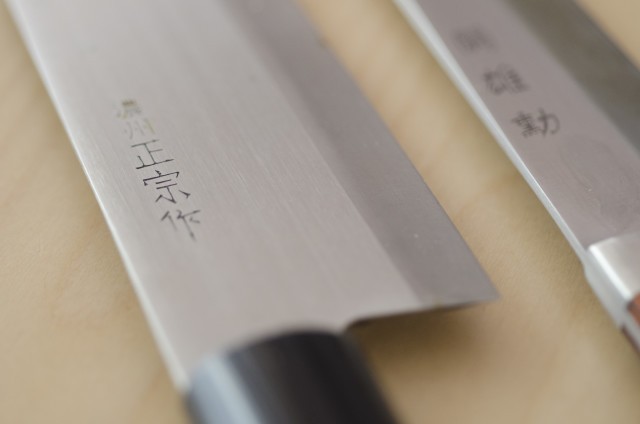
The age-old art of Japanese knives.
That of the Japanese knives is a'ancient art, the forging of which takes us back to the centuries-old tradition Of blade production by master blacksmiths.
I knives are endowed with great cutting capabilities, and according to Shinto tradition, each blade carries its own personal energy, so much so that once it becomes unusable, it is subjected to a kind of funeral ritual that takes place in a temple.