Lecturer in Italian literature, Vincenzo Rizzi has always been passionate about the food sector and expert in the catering. Delegate for the Italian Academy of Kitchen, the association that works to defend and disseminate regional culinary heritages, has several publications to its credit, including a short essay on Apulian products and typicalities that appeared in A. Zanfi's volume "Le Puglie, storie di terre e vini," published by SeB editori in 2013.
He is the owner of a weekly restaurant column "At the Table" in Corriere del Mezzogiorno, Apulia insert of Corriere Della Sera and collaborates with regional and national food guides, "Dolce Guida", "Roots Restaurants" e "Identità Golose".
Particularly fond of his homeland, Apulia, and an expert on its typical features, he has written articles on the gastronomy and on Apulian traditions for several specialized magazines and tourism publications, and has participated in theipated at meetings related to the food and wine industry. Several times he has been part of national culinary juries and taught a course in history of gastronomy and lecture series on the gastronomic journalism at the University of Bari.

Italian Food Academy met with Professor Vincenzo Rizzi, gathering his valuable input on how he has evolved in recent years the restaurant industry and on the new food trends.
Here, below, is what the professional reported:
"The world is changing ever more rapidly, and with it, customs and habits are constantly changing, including in the specific area of the restaurant industry and food-related lifestyles. A field moreover traversed by a long series of fashions and trends, such as to make the panorama particularly complex and at the same time fascinating. One need only think of recent and very different phenomena, such as the introduction of liquid nitrogen and unstructured soup into the kitchen by the Spanish chef Ferran Adrià; or to the spread of the so-called fusion cuisine And of the vegan one.
But I stick to the chronological order and, for the sake of convenience of discourse, focus my attention on the Apulian reality. Not only because it is the one that concerns me closely, but also because starting from a provincial and peripheral perspective can indirectly help to understand, by contrast, what is happening and has happened in other parts of Italy.
The past of catering in Apulia: an industry lacking identity
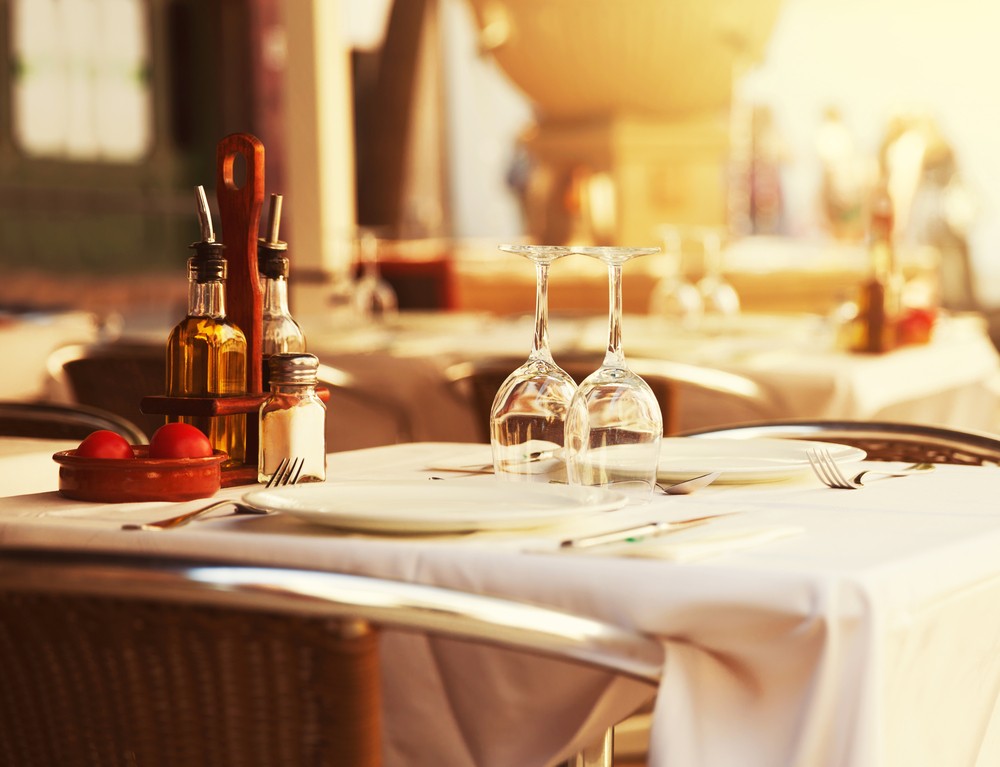
In the 1960s and 1970s in Lombardy, Gualtiero Marchesi made the revolutionary and celebrated nouvelle cuisine known to the world. At the same time in Apulia, if we exclude on the one hand a few noble exceptions and on the other hand the taverns that made food in a homemade and popular way, the middle and upper middle-class catering proposed a line with absolutely no identity, which in the best cases was very distantly inspired by Artusi's mythical cookbook and which stood neither on the level of experimentation and innovation, nor on that of the recovery of territorial typicality. Not to mention the poverty of the enological assortment of the restaurants themselves, and the habit of bringing oil to the table not in the bottle to which it belongs, but in a sad and unhygienic glass cruet. Sins that turn out to be all the more serious when one considers that olive trees and wine are among the main assets of my region.
The shift to a philological reading of the homegrown culinary tradition
Proceeding by leaps and bounds and with necessary omissions we arrive at the turning point between the two centuries, when everything changes very rapidly. There is now a narrowing of the North-South divide in terms of the care given to the quality of food and raw materials, for which the now widely known definition of "zero kilometer" begins to spread, along with the use, in some cases, of produce from the chef's private garden. And in the catering world pugliese two separate but coexisting trends are beginning to emerge: on the one hand, our cuisine is opening up to contaminations from other countries, and to encounters in the same dish of the sea with the land; on the other hand, there is a philological reading of the native tradition.
New food horizons and respect for tradition
A process of growth has finally begun, and developed in recent years, in the direction of seeking new horizons, without, however, forgetting atavistic knowledge, which is perhaps reinterpreted in a modern and light key, for example by limiting soffritti, with a view to an unprecedented interest in the food-health relationship. A decidedly winning idea: combining the past with the present and enhancing flavors that tell a story. An idea that will continue to be successful despite the fierce opposition represented by the swirling advance of so-called globalization, which aims to homogenize tastes and deprive them of their original character. Evidence of this is as much the enormous spread of fast food joints and industrial foods as the breaking down of all geographic-gastronomic barriers. In Singapore one can taste orecchiette, in Bari kebabs and in Oslo pizza Margherita.
The importance of rediscovering indigenous gastronomic culture
An important role, for the rediscovery of the indigenous gastronomic culture, is carried out by the dedicated associationism, which is entrusted with the valuable task of protecting the regional culinary heritages as if they were protected natural oases with many endangered species of animals.
Conventions and debates, studies and research, and a careful selection of typical locales are the tools, through which we must try to defend local culinary heritages from the now rampant transformation of the kitchen into a merely media phenomenon."