1 - Grom is the name of a chain of ice cream shops, created in May 2003 by two 30-year-olds from Turin, Federico Grom and Guido Martinetti.
2 - The two founders opened the first ice cream shop with a capital of 65,000 euros and covered the operational costs of the start-up phase with A bank loan of another 100,000 euros, to be repaid in 5 years.
3 - In 2009, Grom had a turnover of 16 million euros, and in 2014 the turnover came to 30 million.
4 – There are 57 ice cream parlors in Italy, almost all of them in the north-central region. The most southern is the one in Rome. There are 7 foreign ice cream parlors: Dubai, Jakarta, Hollywood, Malibu New York, Osaka, Paris.
5 - There are 650 employees of the company. An average of 8.5 people work in each ice cream shop.
6 - In October 2015, the company was acquired by Anglo-Dutch multinational Unilever (48 billion in sales and 172 thousand employees - 2014 data) already owns the Algida brand. Operational management remains with the two founders. The economic part of the agreement was not disclosed.
7 - Grom's ice cream is not exactly artisanal, at least in the common sense of the definition. Production is centralized in one large plant in Piedmont where semi-finished products are created. The resulting mixture is pasteurized, frozen and then distributed to various outlets. Here additional ingredients are added, then it is hand whipped and served on the cone. The company following a complaint by Codacons no longer defines its ice cream as "artisanal" but uses in communication the definition "ice cream as it used to be."
8 - Grom claims that there are no dyes, preservatives or emulsifiers in its ice creams. The ice cream is made using seasonal ingredients, mountain water, organic eggs and other products, almost all of which come from the owned organic farms, located in the province of Asti. In fact, Grom's ice cream contains E410, or locust bean gum, a thickening additive also used in artisanal ice cream shops.
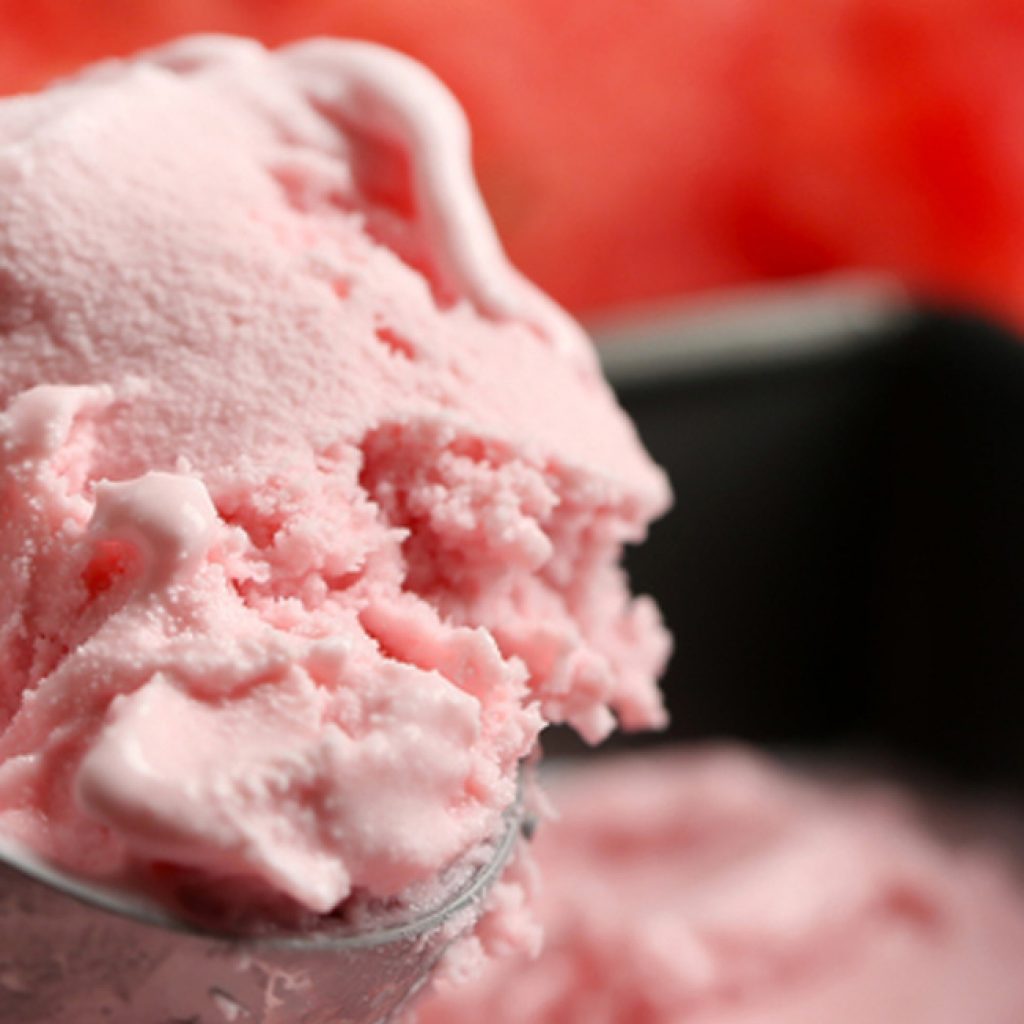
9 - Grom ice cream comes out hard, grainy, with presence of ice crystals, not very scoopable. This presentation defect is solved by the company by resorting to theUse of the sump instead of classic tubs.
10 - Choosing not to use emulsifiers means that the staff at the counter have to do a lot of spatula work, which becomes a real final mantling. In this way the ice cream softens and can be placed on the cone.
11 - This extra-work greatly lengthens the customer's order fulfillment time, causing during peak hours of the Lines of patrons outside the stores. Rows that are interpreted by passersby as a sign of the ice cream shop's success with the public.
12 - Thus, the company's great skill lies not in the quality of the ice cream it produces but in the marketing strategy, which has always presented every defect in the product and workmanship as evidence of its handcrafted nature, turning weaknesses into strengths that are well received and appreciated by its target audience.
To get more information about our course to become a quality ice cream maker. CLICK HERE.
Sources: