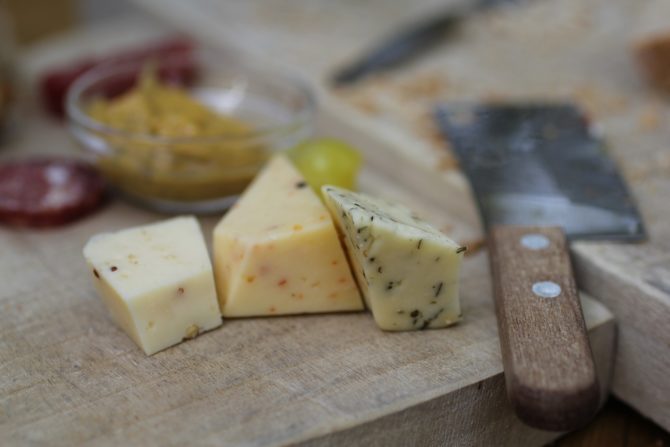
Today that even the scrappiest pizzeria in the most underworld area of a provincial town feels obligated to serve the cheese board along with the jars of jams has become necessary, for each bon vivant self-respecting, have some basics to be able to match flavors and textures. So here we are performing this public service for all our readers.
The reason why cheese and jam have now become an inseparable pair is because of the chemical composition of the two foods. Cheeses are foods in which sugar is practically absent, so they find in jams (in which sugar is about 50% of the total weight) a complementary food, which in our palate results in a new, articulate but balanced flavor.
There are two basic criteria to keep in mind when making the right match: the type of milk used for the cheese (cow's, goat's, or sheep's milk); its texture (soft, aged, semi-hard cheese, etc.); and the type of cheese used to make it. The softer the texture of the cheese, tending toward sweet, the more it will go with jams tending toward sour. The stronger, stronger and more seasoned the cheese, the sweeter the jam will have to be.
NB: jam, marmalade and compote are not absolute synonyms, they identify different products made in different ways with different raw materials. In order not to introduce an additional complicating factor from now on we will use the word "jam" to refer to this entire family of products.
The best combinations
Soft cheeses such as Brie and Camembert. Or blue cheeses such as Roquefort and fresh Gorgonzola. Also for cheeses made from goat's milk: fig, apricot or apple jam.
Spicy and blue-veined cheeses such as Pecorino Sardo, aged Gorgonzola, Formaggio di Fossa: peach jam.
Fresh soft cheeses such as Ricotta, Camembert and Mascarpone: orange or lemon marmalade (for the daring).
Asiago, Murazzano, Robiola d'Alba: strawberry jam.
Robiola di Mondovì, di Roccaverano, di Murazzano: mandarin marmalade.
Long aged Parmigiano Reggiano, aged Pecorino di Pienza: pear jam.
Goat cheese, Robiola di Roccaverano: raspberry jam.
Bra duro, Tuma d'la paja: blueberry jam.
Burrata, Pont l'Eveque de Normandie, Reblochon: black cherry jam.
Not forgetting the honey
For the point made about chemical composition, another very good combination should not be forgotten, that with honey. From acacia honey, which is lighter, to chestnut honey, which is stronger, every type of honey goes well with hard aged cheeses.
Sources: Palatifini.it