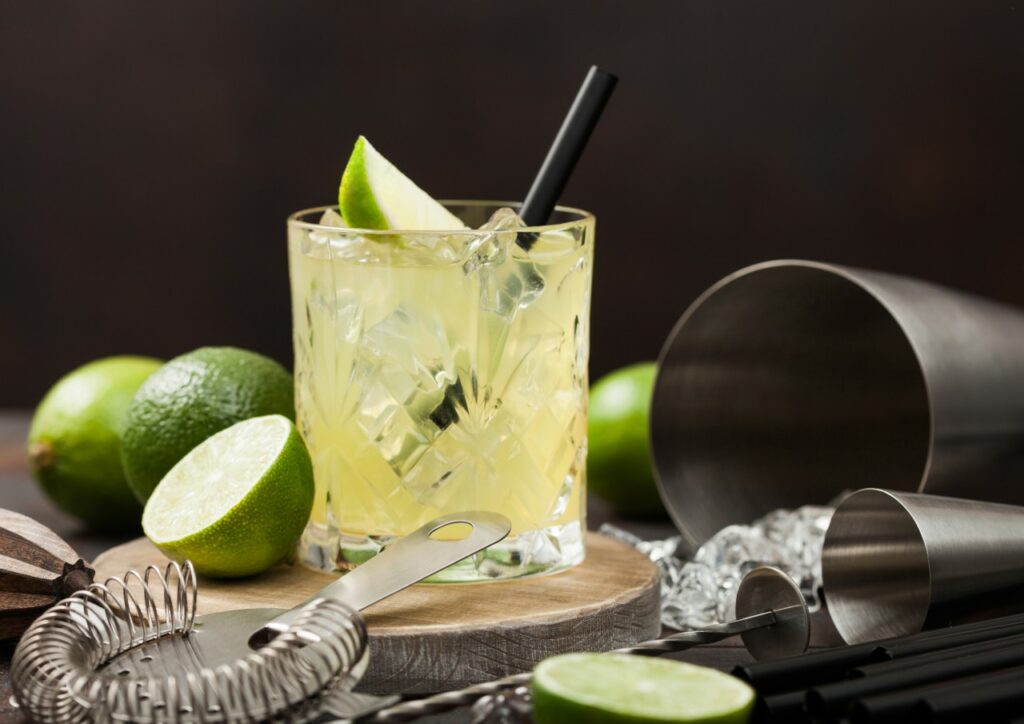
The world of cocktails is a fascinating and flavorful universe where tastes, styles, histories, and traditions mingle. Among the classic drinks that have stood the test of time there is also the tasty and fragrant Gimlet cocktail.
This delicious, slightly tart mix, perfect in any situation, is an icon of the 1920s and continues to be loved by cocktail drinkers around the world. But what is the origin of Gimlet and what are the ingredients that make up the agre and sweet drink?
A cocktail with maritime origins
The legendary Gimlet cocktail originated in the 1900s and originated from a little medical trick of administering doses of lemon juice to sailors in the old British navy in order to combat scurvy, a disease that often struck sailors due to vitamin C deficiency.
The inventor of the cocktail was apparently a shipboard surgeon, the Dr. Thomas Gimlette, who thought of mixing lime juice with gin (widely used on ships) to make it more pleasant to drink. Another version has it that the name of this drink comes from the sharp instrument used to prepare it. In any case, this pungent drink became popular among sailors, so much so that the gimlet was later adopted by the Royal Navy as part of their gin ration.
In time he became so famous that even literature mentioned him: for example, in Raymond Chandler's 1953 novel, "The Long Goodbye," the detective Philip Marlowe drinks gimlet to keep calm. During U.S. Prohibition in the 1920s, then, it became a popular choice among bootleggers and speakeasy goers.
Several variations have been created in recent years, such as the Raspberry Gimlet and the Vodka Gimlet, but its composition is actually clean and essential: 5 parts gin, one part lime juice and a dash of sugar syrup to soften. An unmistakable and perfect drink.
Gimlet recipe: a fresh simplicity and agre
The traditional recipe for Gimlet requires only two main ingredients: gin and lime or lemon juice. To make a gimlet, you need:
- 60 ml gin;
- 30 ml fresh lime or lemon juice;
- 15 ml sugar syrup (optional);
- Ice;
- Slice of lime or lemon for garnish.
To begin with, fill a tumbler low or a cocktail glass with ice to chill it. Meanwhile, pour the gin and lime (or lemon) juice into a shaker filled with ice. Shake vigorously to mix the ingredients and chill the cocktail. At this point, if preferred, a touch of sweetness: add the sugar syrup and shake again. Next, empty the glass containing the ice and pour the strained cocktail inside. Finally, garnish with a slice of lime or lemon and ... the Gimlet cocktail Is ready to be enjoyed!