"Viva la pa, pa, pappa. With the po, po, po, po, tomato. Viva la pa, pa, pappa, Which is a boss, po, po, polavoro." so he sang Rita Pavone in the 1960s, and never were words more appropriate to describe a ancient famous dish For the combination of simplicity and goodness.
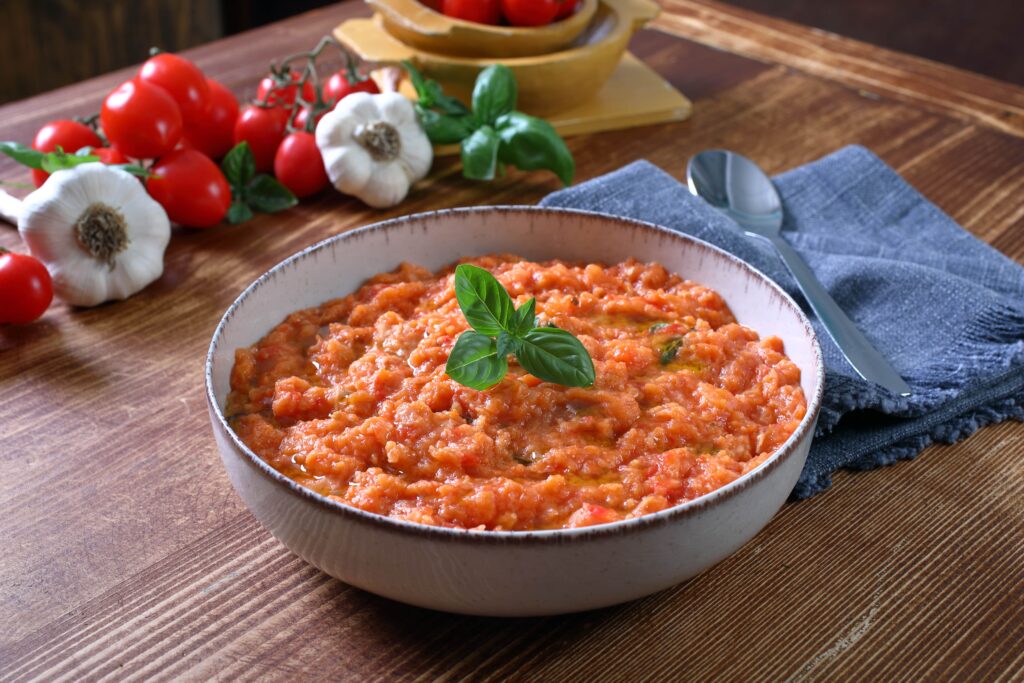
A recipe typical of the Tuscan peasant tradition, particularly Florentine, a dish designed specifically to recycle stale bread: it is the "Pappa al Pomodoro“.
This dish, known through the pages of the Journal of Gian Burrasca of Florentine writer Vamba of 1907, became famous throughout Italy thanks, precisely, to the television version of Gian Burrasca directed by Lina Wertmuller and performed by Rita Pavone who sang the famous song.
The precise origins of the dish are not easily traced, but it is thought to have originated among Tuscan peasants and passed down through the centuries. In the past, Tuscany was a predominantly rural region, and peasants relied on local and readily available ingredients to Create their own meals.
Pappa al Pomodoro was an answer to this need: a simple dish that made use of simple ingredients such as stale bread, ripe tomatoes and basil.
The use of stale bread is particularly significant, as it was a common practice to reuse leftover bread to avoid food waste. The bread, thus soaked in tomato sauce, creates a thick and creamy consistency, hence the name "pappa."
To prepare it properly, one should use the real Tuscan homemade bread, that is, the "silly" one, without salt. It is a dish that can be cooked all year round, using canned peeled tomatoes, but it is in summer, when the tomatoes are ripe and juicy, that it really turns out to be a delight.
It can be made more or less savory with the addition of onion and chili pepper but, according to tradition, it should be served with a little finely chopped garlic, which not everyone likes today, so lighter versions without the use of the latter can also be found.
In addition to its delicious flavor, the Pappa al Pomodoro has deep cultural significance for Tuscans. It represents the connection to the land, tradition and peasant origins. For this reason, it has become a dish that symbolizes regional identity, a testimony to the historical and culinary roots of Tuscany.