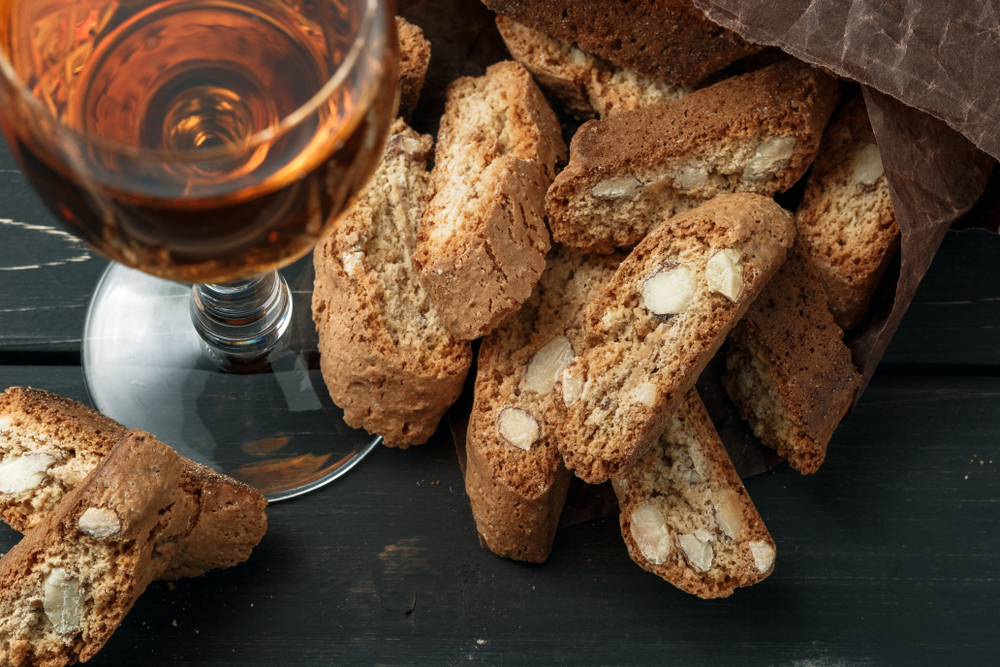
Let them be dipped in the Chianti vinsanto or eaten au naturel, one thing is certain: the tuscan cantucci Are,
gastronomically, what most identifies this tasty land in the rest of the world.
The history of this dry cookie with almonds is ancient and has undergone many "contaminations" before
arrive at its final version, as we know it today and which also boasts the recognition
by Protected Geographical Indication.
Their appearance takes us back to the days of Ancient Rome, with the cantellus, that is, a piece of bread
anise-flavored biscuit, which was ideal nourishment for troops during military campaigns.
Later, in the 14th century, it became widespread among peasant families; bakers prepared loaves of bread
of sweet bread for wealthy customers and the discarded parts, those "set aside" in fact, and
nicknamed cantucci, were baked and destined for populous families.
Catherine de Medici, connoisseur of gastronomy and with a refined palate, she enriched the recipe with almonds
peeled. Soon the cantucci fame spread throughout Europe, and in 1779, the Prato scholar Amadio
Baldanzi codified its first official recipe.
It was then in the second half of the 1800s that the confectioner Antonio Mattei resumed the recipe for cantucci and
presented his creation at the 1867 Paris World's Fair, consecrating the fame of the
cantucci as typical Tuscan cookie, but especially of Prato.
Pastry shops and bakeries are scattered throughout the region where today you can buy and taste the
famous Tuscan dolcetto. An explosion of scents and aromas that tell of a land, a mouth-watering invitation to
Know its traditions, its history.